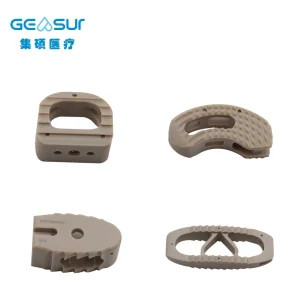
The spinal implant market has evolved significantly, shifting from traditional fusion techniques to sophisticated minimally invasive solutions. Interbody Fusion Cages (IFCs) represent the gold standard in restoring disc height and achieving arthrodesis. As the global demand for spinal stability solutions rises—driven by an aging population and increased spinal disorder diagnoses—manufacturers are under pressure to optimize biomechanical performance while maintaining cost-efficiency.
China has transitioned from a volume-based manufacturing hub to a high-precision engineering center. Facilities like those operated by Hangzhou DTRX Medical Technology Co., Ltd. represent this transformation. With over 20 years of experience, these factories leverage advanced CNC manufacturing, state-of-the-art testing equipment imported from Germany, and rigorous ISO 13485 quality control systems. The efficiency of the Chinese supply chain allows global healthcare providers to access high-quality spinal implants—comparable to Tier-1 international brands—at competitive price points, facilitating better access to healthcare globally.
Industry leaders are currently focusing on two major developments:
Years of Experience
Countries Served
Technical Patents
Standard Certified
When selecting a supplier for interbody fusion cages, purchasing agents and hospital administrators must prioritize the following:
They combine high-end German processing technology with streamlined labor and logistics infrastructure. Companies like Hangzhou DTRX Medical invest heavily in R&D and automated five-axis grinding, ensuring that precision meets high-volume demand.
Reliable manufacturers utilize HL-VMS and hardness testing machines in-house. Always request material test reports (MTR) and sterilization documentation for each batch.
Yes. Top-tier factories with strong R&D teams provide OEM/ODM services, allowing hospitals and distributors to define specific design requirements, dimensions, and material finishes.
 DTRX Orthopedic Implants