The selection of materials in orthopedic implants plays a pivotal role in their effectiveness and longevity. The question arises: "What materials should high-quality orthopedic implants use?" Research suggests that materials like titanium, cobalt-chromium alloys, and bioactive ceramics significantly enhance implant performance. According to the Journal of Orthopedic Research, titanium alloys are favored for their excellent biocompatibility and mechanical properties.
However, the industry does face challenges. Not all materials perform well under stress or in diverse body conditions. For example, cobalt-chromium alloys offer strength but may induce allergic reactions in some patients. This highlights the need for thorough testing and analysis. Furthermore, the choice of materials can vary based on individual patient needs and specific procedures.
Experts emphasize ongoing research to find optimal solutions. The future of orthopedic implants depends on innovative materials that promote better integration with bone tissue. This evolution in material science is critical for enhancing patient outcomes and implant durability. Understanding these factors is essential for developing high-quality orthopedic implants that meet varying patient needs.
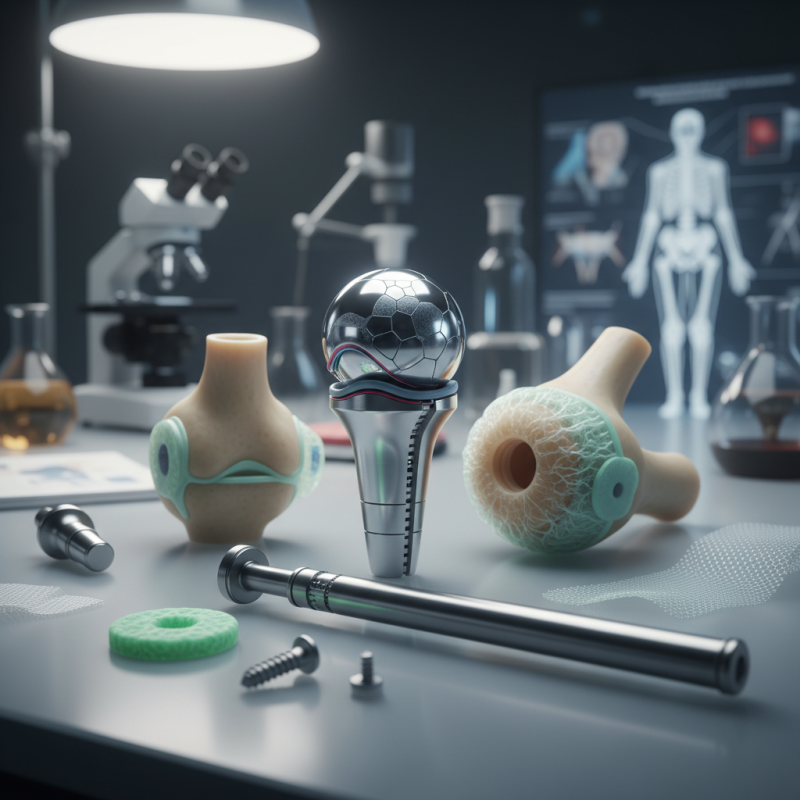
When considering orthopedic implant materials, biocompatibility is crucial. Titanium and its alloys dominate this space due to their strength and low reactivity. According to a report by the International Society for Technology in Arthroplasty, titanium-based implants exhibit a higher success rate, with a 90% survival rate over ten years. This high performance results from their ability to bond with bone, promoting long-term stability.
Ceramics, such as alumina and zirconia, are also important. They are known for their wear resistance and low friction characteristics. Data from the Journal of Biomedical Materials Research indicates that ceramic implants can reduce wear debris, minimizing the risk of implant failure. However, their brittleness can be a concern. Failure rates can rise, especially in high-stress applications.
Polymer-based implants, including polyethylene, offer flexibility and are frequently used in knee replacements. The American Academy of Orthopaedic Surgeons reports that ultra-high-molecular-weight polyethylene (UHMWPE) reduces wear and improves patient outcomes. Yet, challenges remain with long-term durability, requiring ongoing research to improve their properties. The field remains dynamic, and as materials science progresses, innovation must address these limitations.
Biocompatibility is crucial for the success of orthopedic implants. It refers to how well materials interact with the human body. When an implant is inserted, it must not trigger any adverse reactions. Common reactions include inflammation, pain, or even implant failure. Hence, selecting materials that are compatible with biological tissues is essential.
Titanium and polymers are often used in implants. Titanium is strong and lightweight. It is not only durable but also highly resistant to corrosion. Polymers, such as polyethylene, provide flexibility and comfort. However, some polymers may degrade over time. This leads to potential complications for patients. Balancing strength and flexibility is a challenge facing designers.
While many materials pass initial safety tests, long-term effects need more studies. Not every component performs well in the long term. More research is necessary to address these concerns and improve outcomes. Ensuring the biocompatibility of every implant is a complex journey that requires ongoing attention.
When it comes to orthopedic implants, the choice of materials is essential. Two commonly used metals are titanium and stainless steel. These materials offer specific advantages that make them suitable for medical applications.
Titanium is known for its strength and lightweight properties. It exhibits excellent biocompatibility, meaning it interacts well with human tissue. This reduces the risk of rejection. Moreover, its resistance to corrosion ensures long-term durability within the body. However, titanium can be more expensive compared to other metals. Careful consideration of cost and benefits is necessary.
Stainless steel, on the other hand, is widely used due to its reliability and strength. It is an affordable option with good mechanical properties. Despite this, stainless steel is not as biocompatible as titanium. Some patients may experience allergic reactions. While it remains a popular choice, ongoing innovation is vital to improve its performance in the human body. Balancing these materials can lead to better outcomes for patients undergoing orthopedic procedures.
Polymers and composites play a crucial role in the development of high-quality orthopedic implants. These materials are often chosen for their lightweight properties and superior biocompatibility. For instance, polyether ether ketone (PEEK) is gaining attention due to its strength and ability to mimic bone properties. Surgeons appreciate its performance, as it has a low wear rate and reduces the risk of implant failure.
Innovations in polymer technology have led to advanced composites that enhance the mechanical properties of implants. By combining different materials, manufacturers can create devices that better withstand the stresses of daily movement. New composite formulations are being explored to improve adhesion to bone and prevent loosening over time. Despite these advancements, challenges remain. Not all polymers perform exceptionally under high loads. Thus, ongoing research is necessary to refine these materials.
Customization in implant design is becoming increasingly important. 3D printing technology allows for personalized solutions tailored to an individual’s anatomy. This technique can lead to improved outcomes but also raises concerns about the consistency of material quality. Each new approach prompts further investigation into its long-term reliability. The journey of perfecting orthopedic implants is still evolving, inviting professionals to reflect on countless possibilities.
Ceramics have emerged as a prominent choice in the development of orthopedic implants. Their unique properties contribute significantly to their performance. Ceramics are highly biocompatible, reducing the risk of infection or rejection. This makes them ideal for applications in joint replacements and bone grafts. The characteristic hardness of ceramics allows for enhanced wear resistance, essential for long-term durability.
However, the brittleness of ceramics can be a concern. While they resist wear, they can fracture under high impact. This property requires careful consideration in their design and application. Ongoing research aims to improve toughness while maintaining biocompatibility. Engineers and researchers continuously explore new composite materials that blend ceramics with polymers or metals, aiming for improved performance.
The versatility of ceramics extends beyond joint replacements. They can be used in scaffolds for bone tissue engineering, supporting cell growth. These applications open new possibilities in regenerative medicine. Despite their advantages, the creation of ideal ceramic implants is not without challenges. More insights into their mechanical properties and long-term behavior are needed to ensure the success of these innovative materials. Such endeavors highlight the need for a balanced approach in material selection.
| Material Type | Key Properties | Common Applications | Advantages | Disadvantages |
|---|---|---|---|---|
| Alumina (Al2O3) | High strength, wear resistance | Hip joints, dental implants | Biocompatible, low friction | Brittle, sensitive to impact |
| Zirconia (ZrO2) | High toughness, fracture resistance | Dental crowns, femoral heads | Aesthetic appeal, superior strength | More expensive, challenging to manufacture |
| Calcium Phosphate | Bioactive, osteoconductive | Bone graft substitutes, scaffolds | Promotes bone growth, biocompatible | Variable mechanical properties |
| Bioactive Glass | Stimulates bone regeneration | Bone cements, coatings | Good integration with bone, customizable | Fragile, may require reinforcement |
: Titanium alloys are popular due to their strength and low reactivity. Ceramics and polymers also play significant roles.
Biocompatibility ensures that implants bond well with bone and minimize rejection, leading to successful surgeries.
Titanium implants have a high survival rate of 90% over ten years. They promote long-term stability in patients.
Yes, ceramics can be brittle, which increases failure rates in high-stress situations despite their wear resistance.
Ultra-high-molecular-weight polyethylene (UHMWPE) reduces wear and improves flexibility, but long-term durability remains a concern.
Composites combine materials to enhance strength and reduce failure risk, improving performance under daily movement stresses.
3D printing allows for tailored implants. However, it raises questions about material quality and long-term reliability.
Not all polymers perform well under high loads. Continuous research is needed to improve material properties and durability.
The field is evolving, with new innovations requiring reflection on consistency, quality, and long-term outcomes for patients.
Yes, leveraging new materials can improve adhesion to bone, but maintaining performance under stress remains a challenge.
In the field of orthopedic surgery, the selection of materials for implants is crucial for enhancing patient outcomes and ensuring longevity. High-quality orthopedic implants should primarily utilize metals such as titanium and stainless steel, which are celebrated for their strength, durability, and biocompatibility. Additionally, the emergence of innovative polymers and composites has revolutionized implant design, making them lighter and capable of mimicking natural tissue properties.
Ceramics also play a vital role in orthopedic implants, offering unique benefits such as excellent wear resistance and biocompatibility. Understanding the importance of biocompatibility is essential as it ensures that the materials used do not provoke adverse reactions in the body. Ultimately, the optimal choice for implant materials should focus on a balanced combination of mechanical properties and biological compatibility to serve the needs of patients effectively.

DTRX Orthopedic Implants