Choosing an orthopedic implant in 2026 requires more than comparing product catalogs or selecting the newest material. The central question is practical: How to choose orthopedic implants for different orthopedic procedures while respecting anatomy, patient goals, surgical technique, and clinical evidence?
Dr. Daniel J. Berry, an orthopedic surgeon and former president of the American Academy of Orthopaedic Surgeons, has emphasized a useful principle: “The best implant is the one that serves the patient’s specific needs.” That principle remains relevant. A hip replacement for an active 55-year-old may require different fixation and bearing decisions than one for an older patient with fragile bone. A spinal cage, trauma plate, or knee component also demands procedure-specific planning.
Start with the patient, not the brochure. Review bone quality, deformity, infection risk, activity level, allergies, and expected longevity. Then assess implant design, material, fixation method, compatibility with instruments, and published outcomes. Regulatory clearance matters, but it does not replace surgeon judgment or long-term evidence.
Small details matter. A rough surface may support bone integration, yet it can complicate revision surgery. A highly constrained joint implant may improve stability, but it can increase stress on surrounding structures. These trade-offs are easy to overlook.
There is no perfect implant.
Surgeons should also examine manufacturer transparency, post-market surveillance, training support, and availability during revision procedures. Some decisions remain uncertain, especially when evidence is limited. That uncertainty deserves honest discussion, careful consent, and a willingness to reconsider familiar choices.
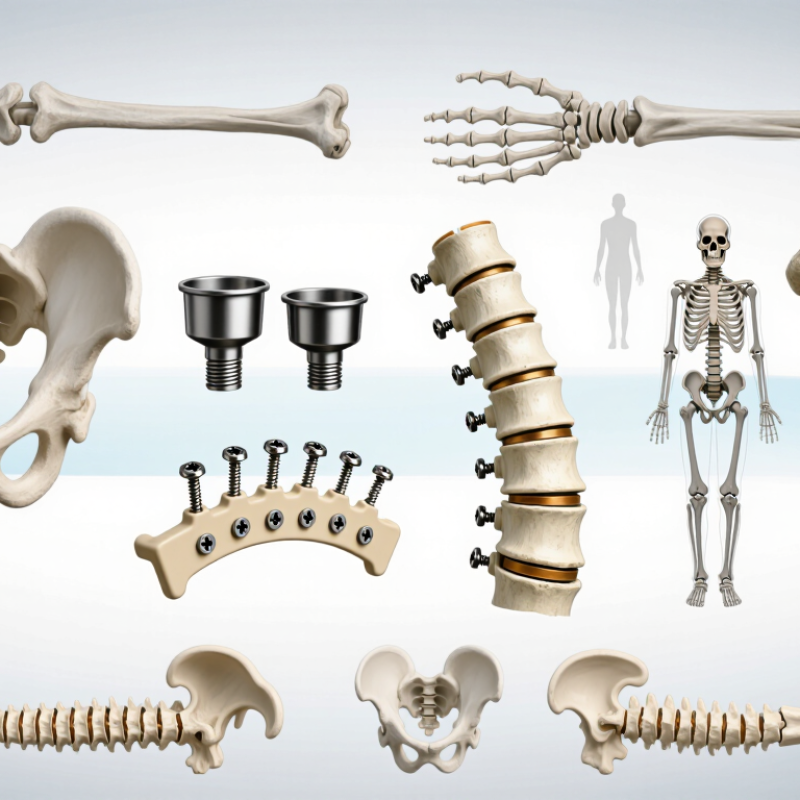
How to Choose Orthopedic Implants in 2026?
WHO estimates that 1.71 billion people live with musculoskeletal conditions worldwide. This figure shows clinical demand, not a reason to implant more devices. A painful hip, unstable knee, or damaged spine needs a clearly documented indication. The 2021 Global Burden of Disease Study also identifies low back pain as a major contributor to disability. However, prevalence alone cannot determine implant selection. Patient age, bone quality, activity level, anatomy, infection risk, and rehabilitation access matter more at the operating table.
Experienced teams should compare implant fixation, material properties, sizing options, and revision pathways. They should also review national arthroplasty registry data, where available. These reports can reveal revision patterns that promotional claims may miss. Imaging should confirm the mechanical problem. Functional goals should be recorded before surgery. A patient who wants to walk without pain needs a different discussion from an athlete seeking high-impact performance. That distinction is easy to overlook.
Tips: Build a short evidence table for each candidate implant. Include survival data, revision rates, contraindications, and follow-up requirements. Ask whether the design suits this patient’s bone and lifestyle, not only the surgeon’s familiarity. Document the uncertainty honestly. Evidence can be incomplete, especially for newer designs. WHO’s 1.71 billion estimate reminds clinicians of the scale of need, but careful selection protects the individual behind the statistic.
| Clinical Need | Typical Orthopedic Implant Category | Relevant Patient or Anatomical Factors | Evidence and Decision Metrics | Priority for Assessment | Key Selection Cautions |
|---|---|---|---|---|---|
|
End-stage hip osteoarthritis or femoral-head destruction Pain, functional limitation, and radiographic joint damage that persist despite appropriate non-operative care. |
Total hip arthroplasty or hemiarthroplasty, depending on diagnosis and acetabular involvement. | Age, activity level, bone quality, fracture status, acetabular disease, comorbidities, leg-length goals, and the patient’s ability to follow rehabilitation. | Compare patient-reported pain and function, implant survivorship, revision risk, dislocation risk, periprosthetic fracture risk, and registry outcomes for the relevant patient group. | High clinical impact | Avoid selecting an implant solely by age or bearing material. Account for surgical approach, component positioning, fixation method, instability risk, and the patient’s informed preferences. |
|
End-stage knee osteoarthritis Severe pain and loss of function after exercise, weight-management strategies, medicines, injections, or other suitable treatments have been considered. |
Total knee arthroplasty; unicompartmental knee arthroplasty may be considered for appropriately selected isolated-compartment disease. | Compartment distribution, ligament integrity, deformity, range of motion, bone stock, alignment, obesity, diabetes, smoking status, and activity expectations. | Assess pain and function scores, range of motion, infection and thromboembolism risk, revision risk, alignment strategy, and outcomes in comparable patient populations. | High clinical impact | A mechanically appropriate design cannot compensate for uncontrolled infection risk, poor soft-tissue status, severe instability, or inadequate postoperative rehabilitation. |
|
Fragility hip fracture A low-energy fracture in an older adult, frequently associated with osteoporosis and increased short-term morbidity. |
Hemiarthroplasty or total hip arthroplasty for selected displaced femoral-neck fractures; internal fixation for selected fracture patterns. | Fracture classification, pre-fracture mobility, cognitive status, comorbidity burden, bone quality, expected survival, and ability to mobilize early. | Prioritize time to surgery, early mobilization, mortality, reoperation, dislocation, infection, fixation failure, and multidisciplinary fracture-care pathways. | Time-critical | Implant choice must be integrated with osteoporosis management, fall prevention, perioperative medical optimization, and venous thromboembolism prevention. |
|
Traumatic fracture fixation Stabilization is required to restore alignment, preserve length, enable healing, or permit early functional use. |
Plates, screws, intramedullary nails, external fixation systems, or patient-specific combinations. | Fracture pattern, open versus closed injury, soft-tissue condition, bone quality, contamination, vascular status, and expected loading environment. | Evaluate union, alignment, implant failure, infection, reoperation, time to weight-bearing, and outcomes for the specific fracture pattern rather than relying only on general device performance. | High clinical impact | Mechanical strength must be matched to biology. Excessive stiffness, poor reduction, soft-tissue compromise, or inappropriate weight-bearing instructions can contribute to failure. |
|
Spinal instability, deformity, or neural compression Implantation may be considered when symptoms, structural instability, deformity, or neurologic compromise justify surgery. |
Pedicle-screw and rod systems, interbody fusion devices, cervical or lumbar arthroplasty devices, and deformity-correction constructs. | Neurologic findings, bone density, sagittal and coronal alignment, segmental instability, smoking, prior surgery, infection risk, and adjacent-level disease. | Review patient-reported outcomes, fusion or motion-preservation goals, neurologic complications, reoperation, adjacent-segment disease, and imaging evidence using the indication-specific literature. | Case-dependent | Do not use an implant as a substitute for a clear diagnosis. Bone-health optimization and careful assessment of non-operative options are particularly important. |
|
Shoulder arthritis or irreparable rotator-cuff disease Persistent pain and loss of function may require anatomic or reverse shoulder arthroplasty in appropriately selected patients. |
Anatomic total shoulder arthroplasty, reverse shoulder arthroplasty, hemiarthroplasty, or fracture-specific shoulder reconstruction. | Rotator-cuff integrity, glenoid bone loss, fracture status, neurologic function, deltoid function, age, activity level, and bone quality. | Compare pain relief, range of motion, instability, loosening, scapular notching where relevant, periprosthetic fracture, infection, and revision outcomes. | Case-dependent | The choice between anatomic and reverse designs depends strongly on cuff function, glenoid anatomy, and deltoid function; implant geometry should not be considered in isolation. |
|
Osteoporosis and poor bone quality Reduced bone strength increases the risk of fixation failure, periprosthetic fracture, and delayed healing. |
Fixation and arthroplasty constructs selected for available bone stock, including cemented or uncemented strategies when clinically appropriate. | Bone-mineral density, prior fragility fracture, vitamin D status, renal function, medication history, cortical thickness, and fracture pattern. | Assess fracture risk, fixation stability, subsidence, loosening, periprosthetic fracture, and whether anti-osteoporosis treatment and nutritional optimization are required. | Risk-modifying | Poor bone quality should trigger a broader perioperative plan rather than an automatic preference for one fixation method. Local anatomy and surgeon experience remain decisive. |
|
Revision arthroplasty or implant failure Indications include infection, aseptic loosening, instability, wear, fracture, malposition, or substantial bone loss. |
Revision stems, augments, cones, cages, custom reconstruction, modular components, or staged revision for confirmed infection. | Cause of failure, bone-loss classification, soft-tissue competence, infection status, patient frailty, previous operations, and reconstruction goals. | Require a documented failure diagnosis, infection work-up, bone-loss assessment, reconstruction plan, complication risk, expected re-revision risk, and institution-specific outcomes where available. | Complex high-risk | Revision implants should not be chosen before identifying the failure mechanism. Suspected periprosthetic joint infection requires systematic investigation and an appropriate treatment pathway. |
|
Infection prevention and implant safety Applies to every implant procedure, especially revision surgery and patients with elevated infection risk. |
Standard validated implant systems selected within a complete infection-prevention and perioperative safety protocol. | Diabetes control, obesity, smoking, immune status, skin condition, dental and urinary symptoms when clinically relevant, prior infection, and operating-room factors. | Monitor surgical-site infection, periprosthetic joint infection, readmission, reoperation, antimicrobial complications, and compliance with evidence-based prevention measures. | Universal priority | No implant material eliminates infection risk. Device selection must be accompanied by screening, antimicrobial planning, sterile technique, wound management, and early recognition of infection. |
|
Patient-centered and health-system value The clinically suitable implant should also be deliverable, traceable, and supported throughout its expected service life. |
An implant with documented regulatory authorization, traceability, validated manufacturing controls, surgical instrumentation, and long-term follow-up capability. | Shared decision-making, health literacy, rehabilitation access, travel distance, follow-up availability, affordability, inventory continuity, and surgeon training. | Consider registry data, long-term revision outcomes, patient-reported outcome measures, total episode cost, operating time, readmission, and availability of revision components. | System-level priority | Short-term purchase price is not equivalent to value. Evaluate the complete care pathway, including training, instruments, follow-up, revision support, and data quality. |
Class III implants carry the highest device risk. They generally require a rigorous premarket approval pathway. Supplier certificates are not enough. Match the exact model, indication, materials, and manufacturing site with official records.
Check the device identifier, package level, sterilization status, and labeling details. Compare them with the physical box. Review the expiration date, lot number, and direct-marking requirements. Small mismatches matter.
Request the latest approval decision summary and device identification record. Ask for current 2026 labeling and reporting requirements. Confirm who updates records after design changes. Keep screenshots and signed responses in the technical file.
No. It only provides a stronger starting point. Clinical evidence, adverse-event trends, and retrieval history remain important. Regulatory clearance cannot guarantee perfect performance in every patient.
Ten-year survivorship means the implant avoided revision during a defined period. It is useful, but not a promise. Check the denominator, follow-up completeness, and confidence intervals. A percentage without context can mislead.
Age, diagnosis, activity level, fixation method, and surgical approach can change outcomes. A 92% result in older, less active patients may not fit younger patients. Compare similar populations.
Look for infection, loosening, instability, fracture, and unexplained pain. Each cause suggests a different clinical concern. Review patterns across several reporting cycles. One attractive table is not enough.
It may be considered when early evidence is credible and indications are suitable. Long-term data may still be limited in 2026. That uncertainty deserves an honest discussion. The failure plan matters too.
Choosing the right orthopedic implant in 2026 requires a structured, evidence-based process. Begin by defining the patient’s clinical need in the context of the global burden of musculoskeletal conditions, estimated at 1.71 billion cases by the WHO. Then compare implant materials according to biocompatibility evidence, including ISO 10993 testing, and mechanical performance under relevant ASTM strength standards. The decision should also consider anatomy, activity level, bone quality, surgical objectives, and expected rehabilitation demands.
To understand how to choose orthopedic implants for different orthopedic procedures, clinicians should verify regulatory status, including FDA Class III requirements, UDI records, and applicable 2026 compliance obligations. Long-term performance matters as well, so review national registry data on 10-year survivorship and revision rates. Finally, assess total cost alongside patient-reported outcomes, complication risks, follow-up needs, and the surgeon’s procedure-specific experience. A balanced choice should support safety, durability, functional recovery, and individualized patient care.

 DTRX Orthopedic Implants