How to Choose Orthopedic Implants for Various Procedures?

Time:2026-06-01 Author:Madeline
0%

Choosing the right orthopedic implants is critical for successful surgical outcomes. It affects healing, recovery time, and overall patient satisfaction. Surgeons must consider various factors. Understanding how to choose orthopedic implants for different orthopedic procedures is essential for both new and experienced practitioners.

Surgeons face a range of options, each with unique benefits and drawbacks. Materials, design, and compatibility with the patient’s bone structure are key considerations. Not all implants work for every case; customization is often necessary. For instance, specific procedures like joint replacements or fracture repairs require different approaches.

Experience plays a significant role in decision-making. Surgeons often reflect on past cases to guide their choices. However, they can still face uncertainties, like unexpected complications. Continuous education and collaboration with peers can enhance decision-making. Ultimately, keeping patient-centered care in mind is vital as it influences the choice of orthopedic implants.
How to Choose Orthopedic Implants for Various Procedures?

Understanding the Types of Orthopedic Implants Available in the Market

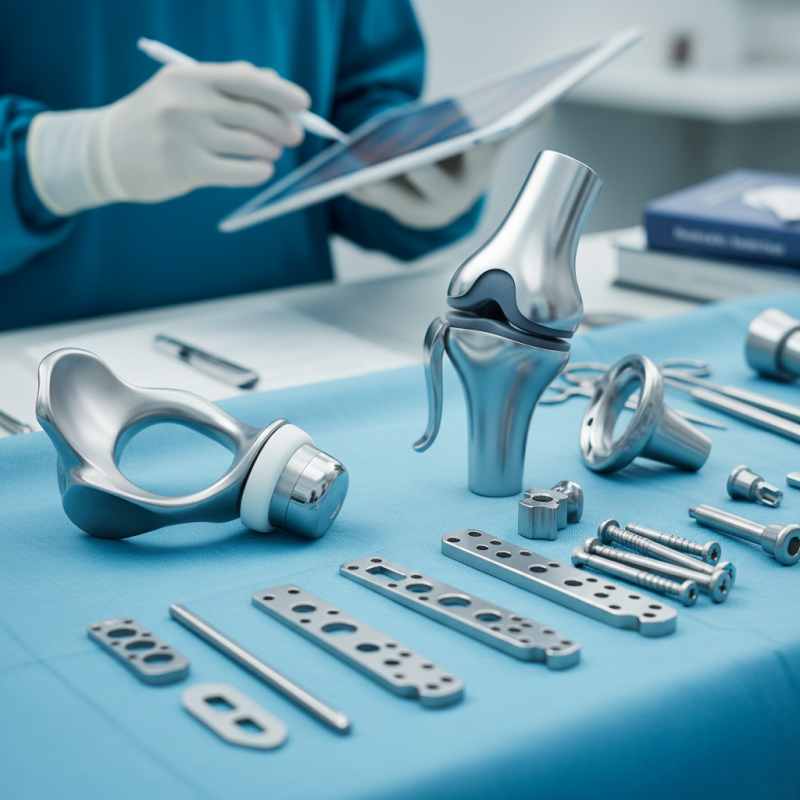
When selecting orthopedic implants, understanding the types available is crucial. Different procedures require specific implants tailored to unique needs. For instance, joint replacements may use metal alloys, while fracture fixations often involve plates or screws made from titanium. Each material provides distinct advantages, including strength, weight, and biocompatibility.

Another consideration is the implant design. Some implants are modular, allowing surgeons to adjust components during the procedure. Others are pre-assembled, which can simplify the surgery but may limit customization. Surgeons must weigh the ease of use against the necessity for a precise fit. A thoughtful choice can greatly enhance patient outcomes.

It’s vital to acknowledge that no implant is perfect. Some patients may experience complications, including infection or implant failure. Surgeons should discuss these risks openly with patients. Continual education on emerging technologies is important. This awareness can guide better decisions and improve patient safety in the long term.

Key Factors Influencing the Selection of Implants for Specific Procedures

Choosing the right orthopedic implants is crucial for successful surgical outcomes. Key factors influencing the selection include patient demographics, the nature of the injury, and material compatibility. Recent studies highlight that about 30% of implant failures stem from poor material choice. Surgeons must weigh factors like the patient's age, weight, and activity level when choosing implants.

Material properties play a significant role. For instance, titanium and stainless steel are popular due to their strength and biocompatibility. Research indicates that 70% of orthopedic specialists prefer titanium for its superior corrosion resistance. This is vital for longevity and reducing infection risks. Furthermore, the surgeon's experience and familiarity with specific implants influence decisions significantly.

Clinical guidelines suggest considering the long-term outcomes associated with specific implants. Data shows that misalignment in placement leads to a 25% increase in post-operative complications. This highlights the need for thorough pre-operative planning and engagement with surgical teams. Relying solely on manufacturer data without real-world performance analysis can result in suboptimal choices.

Evaluating Biocompatibility and Material Properties of Orthopedic Implants

Choosing the right orthopedic implants demands careful consideration of biocompatibility and material properties. Biocompatibility ensures that the material interacts safely with the body without causing adverse reactions. According to a study published in the Journal of Biomedical Materials Research, over 60% of implant failures stem from inadequate biocompatibility. Materials like titanium offer good compatibility but may not always integrate well with bone tissue.

Material properties such as strength, elasticity, and corrosion resistance are crucial. Implants must withstand the mechanical stresses of daily activities. A report from the Orthopedic Research Society highlights that implants with higher elasticity reduce stress shielding, improving long-term outcomes. However, it is important to note that no single material is perfect for all situations. Some polymers may provide better flexibility but lack strength compared to metals.

In practice, selecting an orthopedic implant often involves a compromise. Common metrics such as the Young's modulus and fatigue strength are important indicators, but these properties can vary significantly in real-world applications. Continuous research is essential to improve current materials and develop new ones that better meet patient needs. This ongoing evolution reflects the complexities involved in choosing the right implants for diverse orthopedic procedures.

Assessing Surgical Techniques and Their Impact on Implant Selection

Choosing orthopedic implants requires careful consideration of surgical techniques. Each procedure has unique demands that dictate the type of implant used. For instance, a minimally invasive technique may benefit from lighter implants, while traditional methods might use heavier, more durable options. Surgeons must adapt their choices based on the complex interplay between the technique and implant characteristics.

When selecting an implant, consider the learning curve associated with various surgical methods. Some approaches may require experience to master. Watching peers perform these techniques can boost confidence and inform your choices. Keep in mind that diverse skillsets can alter implant suitability. Always be open to feedback during surgeries to refine your decision-making.

Tips:

  • Evaluate the procedure’s requirements thoroughly.
  • Seek peer opinions when uncertain about an implant choice.
  • Reflect on past experiences to guide future selections.

Constantly reassess your preferences. What worked well in one procedure may not be suitable for another. Engage in discussions about evolving surgical methods. This will enhance your understanding and ensure reliable implant choices in the future.

Reviewing Clinical Outcomes and Long-Term Success Rates of Different Implants

When selecting orthopedic implants, evaluating clinical outcomes is critical. Studies show that certain implants achieve better long-term success rates. For example, a comprehensive analysis published in the Journal of Orthopedic Research highlighted that titanium implants exhibit a failure rate of approximately 2.5% after ten years. In contrast, some steel implants have reported failure rates as high as 5.8% over the same period.

It’s essential to consider both the material and design of the implant. Data from a multi-center study indicated that cemented implants often achieve superior stability compared to uncemented options, especially in older patients. However, uncemented implants can offer benefits in younger populations, with a focused recovery period and improved bone integration. Yet, there's ongoing debate regarding which design provides the best outcomes when factoring in patient age and activity levels.

Despite advancements, some challenges remain. Surgeons must remain vigilant regarding implant-related complications. A peer-reviewed study found that 15% of patients experienced complications within the first five years of receiving certain implants. This highlights the need for continuous innovation and assessment in implant technology. Decision-making should involve both empirical evidence and the unique circumstances of each patient, ensuring a tailored approach to orthopedic care.

How to Choose Orthopedic Implants for Various Procedures? - Reviewing Clinical Outcomes and Long-Term Success Rates of Different Implants

Implant Type Procedure Clinical Outcomes (%) Long-Term Success Rate (%) Common Complications (%)
Total Hip Replacement Hip Osteoarthritis 90% 95% 5%
Knee Arthroplasty Knee Degeneration 92% 90% 7%
Spinal Fusion Spinal Instability 85% 80% 10%
Shoulder Replacement Shoulder Arthritis 88% 85% 6%
Ankle Fusion Ankle Arthritis 80% 78% 12%

FAQS

: What types of materials are commonly used for orthopedic implants?

: Common materials include metal alloys for joint replacements and titanium for fracture fixations. Each material offers unique benefits.

How does implant design affect surgery?

Modular designs allow adjustments during surgery. Pre-assembled implants simplify surgery but may limit customization.

Are all orthopedic implants free from complications?

No implant is perfect. Patients can face risks like infection or implant failure. Open discussions about these risks are essential.

Why is understanding surgical techniques important for implant selection?

Surgical techniques dictate implant choice. Lighter implants suit minimally invasive methods, while heavier ones fit traditional techniques.

How can experience influence implant suitability?

Some techniques require expertise. Observing peers can boost confidence and improve decision-making regarding implant selection.

What is the long-term success rate for titanium implants?

Studies show titanium implants have about a 2.5% failure rate after ten years, indicating better longevity than some steel implants.

Are cemented implants more stable than uncemented ones?

Yes, cemented implants often provide superior stability, especially in older patients. Uncemented options may benefit younger patients.

Do all implants have similar failure rates?

No, they vary. Some steel implants can have failure rates as high as 5.8%, while titanium tends to perform better.

What ongoing challenges do surgeons face with implants?

Complications can occur. Reports indicate about 15% of patients may experience issues within five years of receiving certain implants.

How should surgeons tailor their approach to implant selection?

Surgeons must consider empirical evidence, patient age, and activity levels to make educated decisions for personalized care.

Conclusion

Choosing the right orthopedic implants is crucial for the success of various orthopedic procedures. In the article "How to Choose Orthopedic Implants for Various Procedures?", several key aspects are explored to aid in this selection process. First, it outlines the different types of orthopedic implants available in the market, emphasizing the importance of understanding their specific applications. Key factors influencing the selection include patient anatomy, the intended procedure, and expected recovery outcomes.

Additionally, evaluating the biocompatibility and material properties of implants is essential to ensure they are safe for patients. The article also discusses the significance of surgical techniques and how they influence implant selection, as well as reviewing clinical outcomes and long-term success rates associated with different implants. By considering these factors, healthcare professionals can effectively address the question of how to choose orthopedic implants for different orthopedic procedures, leading to better patient results and enhanced surgical success.

Madeline

Madeline

Madeline is a dedicated marketing professional with a wealth of expertise in our company's core offerings. With a keen understanding of the industry, she brings a unique perspective to her role, consistently delivering high-quality content that highlights the superior aspects of our products. As......